

Special Session 12
MXenes FROM FUNDAMENTAL SCIENCE TO EMERGING TECHNOLOGIES (SS12)
MXenes represent a rapidly expanding family of two-dimensional materials with exceptional chemical and structural diversity. Their rich transition metal chemistry, tunable surface terminations and high electrical conductivity have established MXenes as a versatile platform for fundamental studies and technological development. Progress in synthesis, surface engineering and characterization has expanded the range of compositions and properties, while advances in computational modelling are providing deeper understanding of their surface chemistry, electronic behaviour under operating conditions. Recent developments in MXenes are creating opportunities for new technological applications. Their electronic and ionic transport properties are being investigated for memristors, artificial synapses and ionotronic devices, while their interaction with electromagnetic radiation is opening opportunities in antennas, electromagnetic shielding and communication technologies. Flexible and mechanically adaptable MXene systems are advancing toward electronic skin, wearable electronics, bioelectronics and soft robotic systems. MXene membranes and confined architectures are also creating possibilities for selective ion transport, water purification and blue energy technologies. More recently, their lightweight nature, thermal properties and electromagnetic response have stimulated interest in technologies intended for demanding and extreme environments, including aerospace and space-related applications.
This special session will highlight recent experimental and theoretical developments in MXene research. Scalable synthesis and manufacturing will be considered for translating laboratory scale results into reliable technologies. It will provide a forum for identifying research directions emerging from the increasing diversity of MXene compositions, properties and functions. Recent developments in high-throughput calculations, materials databases and machine learning will be highlighted for understanding structure-property relationships, property prediction and materials selection. Particular emphasis will be given to advances in surface and interface engineering, including electron transfer and interlayer interactions with relevance to memristors, artificial synapses, ionotronics, nanofluidic systems, and electrochemical devices. The session will also address challenges associated with stability, oxidation, reproducibility and integration of MXenes into functional devices. Emerging areas such as bioelectronics, soft robotics, photonics, intelligent sensing and electromagnetic technologies will also be considered. The session will encourage discussion on the scientific and technical barriers that need to be addressed as MXene research progresses from materials discovery and proof-of-concept demonstrations toward reproducible and practically relevant technologies.
TOPICS OF INTEREST INCLUDE, BUT ARE NOT LIMITED TO:
Fundamental MXene Science
- New compositions, ordered structures and high entropy MXenes
- Surface terminations, defects, intercalation, heterostructures and confined environments
- Electronic, magnetic, optical, mechanical and thermal properties
- In situ and operando characterization
- Density functional theory, atomistic modelling and multiscale simulations
- High-throughput screening, materials databases, machine learning-driven materials discovery
Energy Conversion and Catalysis
- Batteries, supercapacitors and emerging energy storage concepts
- Hydrogen production, fuel cells and electrocatalysis
- CO2 capture, conversion, and photocatalysis
- Solar-energy conversion and harvesting
Emerging MXene technologies
- Memristors, resistive switching, neuromorphic computing and artificial synapses
- Flexible, stretchable and printed electronics, smart textiles and wearable systems
- Biomedical applications, including bioelectronics, neural interfaces and artificial muscles
- Soft robotics, intelligent sensing, multimodal sensors and autonomous systems
- Microwave devices, antennas, EMI shielding and electromagnetic absorption
- Photodetectors, optoelectronics, photonics and light-responsive devices
- Water purification, environmental remediation, and blue-energy technologies
- Thermal management, extreme environment applications, manufacturing and scale-up
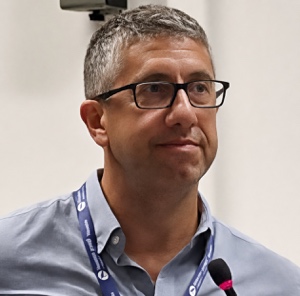
ORGANISER(S):
-
-
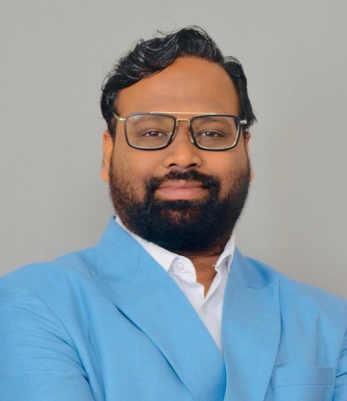 Dr. Moses Abraham Bokinala Institut de Chimie Physique, CNRS
Université Paris-Saclay,
France
moses.bokinala@universite-paris-saclay.fr
PUBLICATION:
Info will be available soon!
INVITED SPEAKER(S):
Info will be available soon!